The Importance of Rituals in Hindu Dharma for Children: Making Traditions Fun and Meaningful
As a parent, instilling a sense of culture and tradition in your child from an early age can be deeply rewarding. At Aum School, we understand the importance of rituals in Hindu Dharma and how they contribute to a child’s holistic development. By making these rituals fun and meaningful, we help young children connect with their heritage and develop values like respect, gratitude, and mindfulness. For families who are looking for ways to introduce their children to Hindu traditions, our approach brings rituals to life in a way that’s engaging and educational.
Why Rituals Matter in Early Childhood Development
Rituals play a significant role in helping children understand the world around them. They create a sense of structure and provide a comforting rhythm to daily life. In Hindu Dharma, rituals are not just actions; they are a way to instill discipline, gratitude, and spirituality. For young children, these practices become an opportunity to learn through experience, fostering a deep-rooted sense of belonging and cultural identity.
At Aum School, we incorporate simple Hindu rituals into our curriculum, allowing children to participate in a hands-on way. This not only introduces them to their cultural roots but also helps them understand the values behind these practices.
Hindu Dharma Rituals We Practice at Aum School
Here are some child-friendly Hindu Dharma rituals we celebrate with our students, each designed to be meaningful and age-appropriate:
- Lighting a Diya for Gratitude
Every morning, we gather the children to light a diya (lamp) as a symbol of gratitude and positivity. Lighting a diya is a common ritual in Hindu households, and it represents the removal of darkness and the welcoming of light and knowledge. By participating in this ritual, children learn the value of gratitude and begin each day on a positive note. - Simple Puja Ceremonies for Special Occasions
Puja ceremonies are a fundamental part of Hindu Dharma. At Aum School, we simplify these ceremonies so that young children can understand and participate. During festivals, we conduct short pujas where children can offer flowers and fruits, teaching them the importance of respect and reverence. This hands-on participation in pujas allows children to feel connected to their spirituality in a gentle, approachable way. - Chanting Short Mantras for Focus and Calm
Mantras have a calming effect and can help children develop focus and mindfulness. We introduce simple, short mantras that children can easily recite, such as "Om" or "Gayatri Mantra." Chanting these mantras not only brings peace and positivity but also teaches children the power of sound and vibration. At Aum School, we believe that incorporating mantras helps children develop a calm, focused mind. - Creating Rangoli for Festivals
Rangoli is a popular tradition during Hindu festivals. The act of creating patterns with colored powders encourages creativity and fine motor skills. During Diwali and other festivals, our students participate in making simple rangolis with safe, eco-friendly materials. This ritual fosters creativity while helping children learn about the cultural significance of the festival in a fun, hands-on way. - Celebrating the Significance of Prasad (Offering)
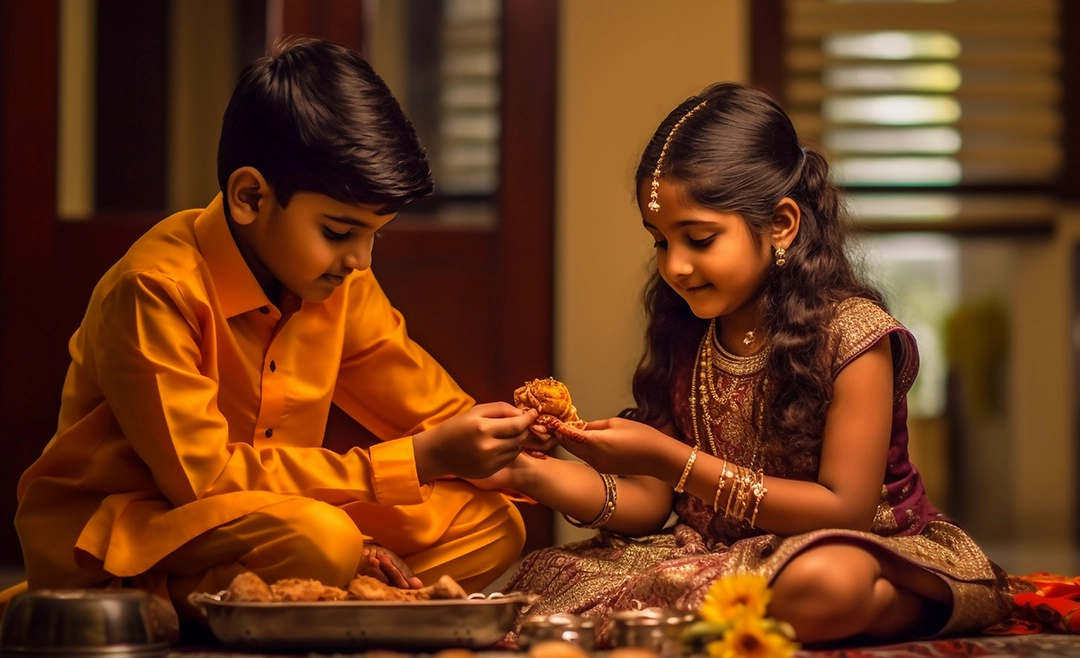
In Hindu Dharma, prasad is a sacred offering given after a ritual. At Aum School, we involve children in making simple prasad, such as fruit or sweets, to understand the importance of sharing and gratitude. They learn that prasad represents blessings and is a symbol of the community spirit. This ritual teaches children the values of sharing and appreciating the abundance around them.
Making Rituals Fun and Meaningful for Kids
At Aum School, we believe that rituals should be both enjoyable and educational. Here are a few ways we make these practices engaging for young minds:
- Storytelling to Explain Rituals
Each ritual we practice is explained through storytelling, which makes it easier for children to grasp its meaning. For example, before lighting a diya, we tell a story about its significance, linking it to values like positivity and gratitude. Storytelling adds depth to rituals, making them more memorable for children. - Hands-On Involvement
Children are more likely to enjoy rituals when they can actively participate. Whether it's making a simple rangoli or offering flowers in a puja, we ensure that each ritual is interactive. This approach helps children connect with the practice on a personal level and encourages them to embrace their cultural heritage. - Encouraging Questions and Exploration
We foster a curious environment where children feel comfortable asking questions about the rituals they participate in. By answering their questions and encouraging them to explore, we make learning about Hindu Dharma rituals a fascinating experience for them. - Celebrating Together as a Community
Rituals become even more meaningful when shared. At Aum School, we celebrate Hindu festivals as a community, allowing children to experience the joy of collective celebration. This instills a sense of unity and helps them understand the communal aspect of Hindu traditions.
Conclusion
Rituals in Hindu Dharma are not just cultural practices; they are valuable tools for teaching children gratitude, discipline, and respect. At Aum School, we are dedicated to making these traditions accessible, fun, and meaningful for young learners. By introducing children to these simple, engaging rituals, we help them connect with their heritage and develop a foundation in values that will guide them throughout their lives.
If you're a parent & looking to provide your child with a culturally rich education that honors Hindu Dharma, Aum School offers the perfect blend of tradition and learning. Join us in creating a nurturing environment where your child can grow with confidence, cultural awareness, and a deep respect for their heritage.
AUTHOR

Amit Mishra
Member of the Board of Directors, Aum Education Society of America.